SHOULDER CONDITIONS
Shoulder Injuries
Shoulder Arthritis
Shoulder arthritis is a degenerative condition that causes progressive wear of the cartilage within the shoulder joint. It commonly leads to pain, stiffness, reduced range of motion and difficulty with everyday activities such as dressing, lifting or reaching overhead. Symptoms often worsen over time and may not respond fully to medication or physiotherapy. When conservative treatments are no longer effective, surgical options including shoulder arthroscopy or shoulder replacement can significantly reduce pain, improve movement and restore quality of life. Treatment is tailored to the individual, based on the severity of arthritis, functional demands and overall health.
Shoulder Arthritis
What is Shoulder Arthritis
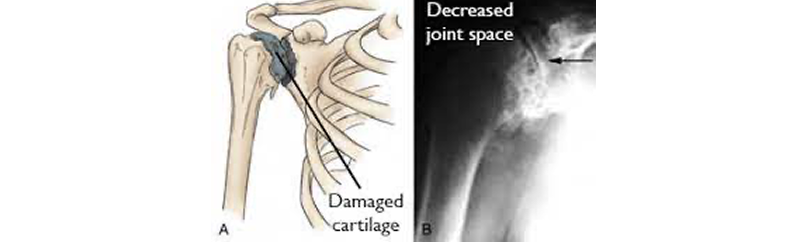
Arthritis is due to the progressive loss of the smooth surface covering the joint surface ( articular cartilage). It can be due to osteoarthritis (“wear and tear”), rheumatoid arthritis, avascular necrosis or post-traumatic arthritis (following injury to the joint). Thankfully shoulder arthritis is not as common as hip or knee arthritis as it is a non-weight-bearing joint.
What are the symptoms of Shoulder Arthritis
The most common symptoms of shoulder arthritis are pain and loss of range of motion. Patients often complain of pain particularly in cold weather. I noticed difficulty with activities above the horizontal for example taking something from a high shelf. They may experience creaking in the joint. As the disease progresses the pain tends to get more severe and most patients develop significant pain at night which can disturb their sleep.
How is Shoulder Arthritis Diagnosed?
The diagnosis is usually made from a combination of the patients symptoms and clinical examination. By the time significant arthritis has developed the patient usually will have lost a good deal of the range of motion. We will check the shoulder for strength to assess the integrity of the rotator cuff muscles. X-rays are the most useful investigation for Shoulder arthritis and in fact show the bone damage better than MRI scan. MRI scan is helpful in evaluating the rest of the soft tissues such as the rotator cuff. Before shoulder replacement we frequently use CT scan to check the degree of bone damage and to plan our surgery for best outcome.
Shoulder Arthritis
Treatment of Shoulder Arthritis
What Treatments are available?
Treatments are divided into non-operative and operative treatments.
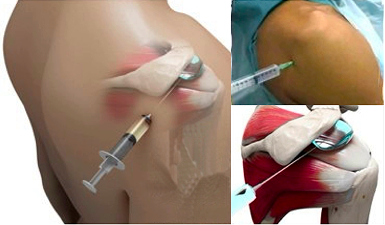
A 5ml syringe of Cortisone mixed with Local Anaesthetics can be easily and painlessly injected around the shoulder to treat a number of different problems
Non-Operative treatments:
- Rest or change in activities to avoid provoking pain. You may need to change the way you move your arm to do things.
- Physiotherapy exercises may improve the range of motion in your shoulder.
- Nonsteroidal anti-inflammatory medications (NSAIDs), such as aspirin or ibuprofen, may reduce inflammation and pain.
- Corticosteroid injections in the shoulder can dramatically reduce the inflammation and pain. However, the effect is often temporary.
- Hyaluronic acid injections act like a lubricant and shock absorber and can be useful in shoulder arthritis and can be repeated if useful.
- Moist heat
- Ice your shoulder for 20 to 30 minutes two or three times a day to reduce inflammation and ease pain.
When is a shoulder replacement necessary?
Generally, shoulder replacement is advisable when the symptoms of pain and stiffness are significantly interfering with quality of life. If you are getting sleep disturbance that is not eased by simple medication it is time to think of surgery.
Surgery may be also a good option in patients where stiffness (loss of motion) is the main symptom particularly if both shoulders are involved and it interferes with activities of daily living such as personal hygiene. It is probably better to replace the joint before the range of motion deteriorates too severely as the results are better if the shoulder hasn’t stiffened completely.
What shoulder conditions can be treated with a shoulder replacement?
A shoulder replacement is commonly performed where the joint surfaces of the shoulder are damaged for example in osteoarthritis (‘wear-and-tear’ arthritis), rheumatoid arthritis or other types of arthritis. The joint surfaces may also be damaged as a result of an accident – post traumatic arthritis. Patients who have developed arthritis secondary to severe rotator cuff problems may also be a candidate for shoulder replacement surgery.
Are there different types of shoulder replacements?
There are two main types of shoulder replacement.
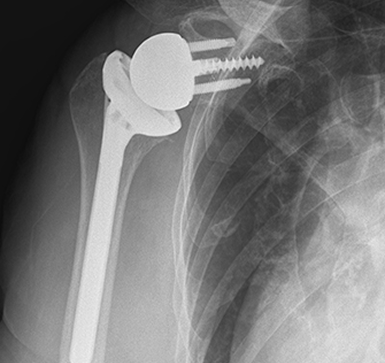
Reverse Geometry Shoulder Replacement
This type of surgery is performed when there is poor function of the rotator cuff (internal muscles) or where there is a lot of damage to the socket and an anatomical replacement is not possible. (reverse geometry TSR)
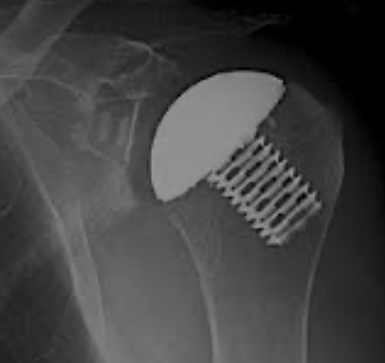
Anatomical Total Shoulder Replacement
Anatomical Shoulder replacement is performed when the rotator cuff is strong and there is not too much deformity of the joint surfaces. In this surgery the humeral head (ball) and glenoid (socket) are replaced with metal and cemented plastic components.
Anatomical Shoulder replacement is performed when the rotator cuff is strong and there is not too much deformity of the joint surfaces.
Shoulder Arthritis
Managing Shoulder Arthritis

Shoulder Arthritis
Anatomical Shoulder Replacement
Shoulder Arthritis